Coloring Your Feelings: Using Art to Nurture Emotional Intelligence
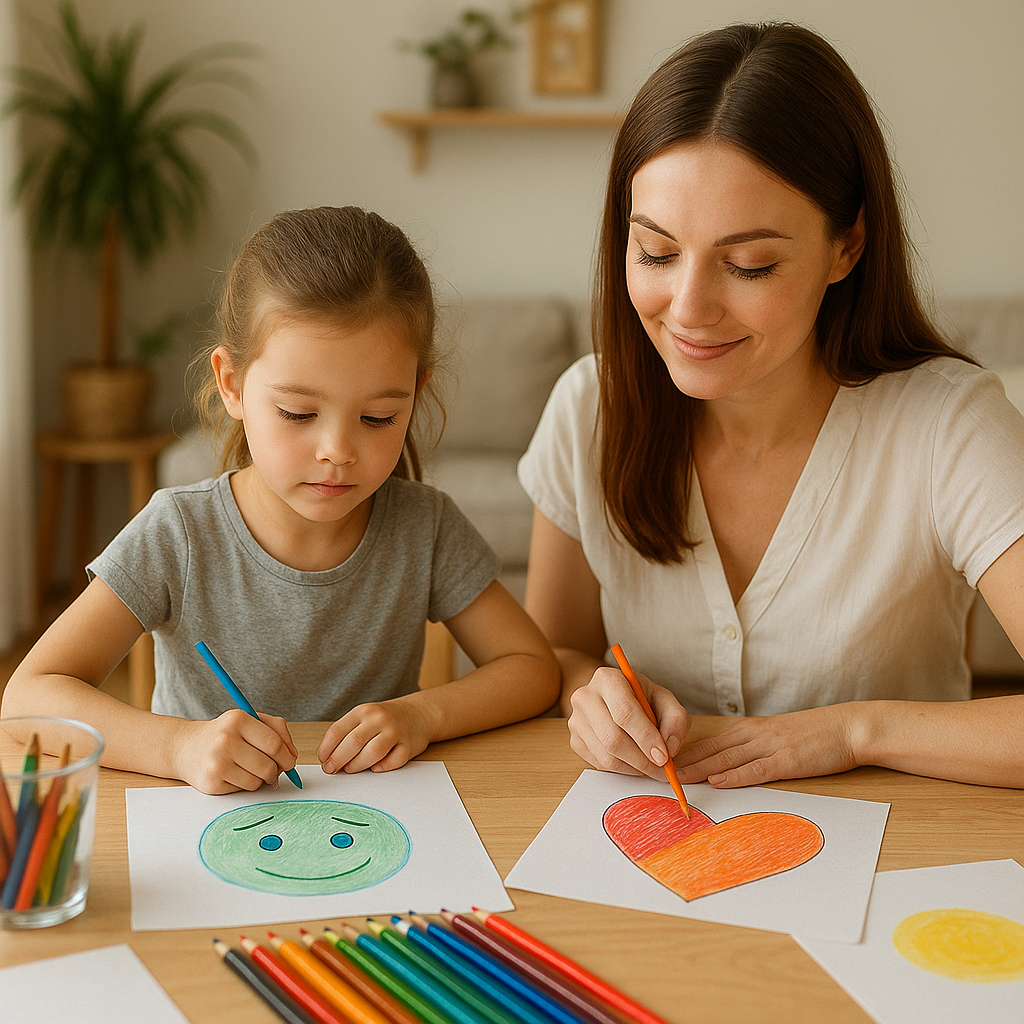
Children experience a whirlwind of complex emotions every day, but they often lack the vocabulary to express them. A tantrum might hide frustration, while shyness could mask anxiety. As parents, one of our most important jobs is to give our kids the tools to understand and communicate their feelings. This is the foundation of emotional intelligence (EQ), a skill that's just as vital as IQ for a happy, successful life.
But how do we talk about something as abstract as a feeling? This is where art, and specifically coloring, becomes a superpower. It provides a safe, non-verbal outlet for expression and a tangible way to explore the inner world.
The Science: Why Coloring Calms the Brain
When a child is overwhelmed by a big emotion (the 'amygdala hijack'), their rational brain (the prefrontal cortex) can shut down, making conversation difficult. The simple, rhythmic, repetitive motion of coloring is calming. It activates different parts of the brain, creating a state of relaxed focus where they can process feelings without the pressure of having to talk about them immediately. It bridges the gap between the emotional and logical parts of the brain.
Research from Johns Hopkins shows that coloring activates both sides of the brain's cerebral cortex. When we focus on coloring, we activate the frontal lobe (responsible for organizing and problem-solving) and the parietal lobe (responsible for fine motor skills and sensory processing). This bilateral brain activation creates a meditative state similar to what you might achieve through mindfulness practices.
Understanding Emotional Development by Age
Ages 2-4: The Foundation Years
At this age, children are just beginning to recognize that they have feelings, but they can't always name them. They express emotions through behavior rather than words. Coloring at this stage is about providing a calming activity and beginning to associate colors with feelings in very simple ways.
- What to expect: Big emotional outbursts, difficulty transitioning between activities, tantrums when frustrated
- How coloring helps: Provides a soothing activity, helps develop focus, creates positive associations with quiet time
- Best approach: Keep it simple with large, bold images and chunky crayons. Focus on the process, not the outcome.
Ages 4-6: The Naming Stage
Children begin to identify and name basic emotions like happy, sad, mad, and scared. They're developing empathy and can start to understand that others have feelings too. This is the perfect age to introduce color-emotion associations.
- What to expect: More verbal expression of feelings, beginning to understand cause and effect with emotions
- How coloring helps: Creates a bridge between feeling and expression, allows practice with emotional vocabulary
- Best approach: Introduce simple emotion faces to color, create feeling color wheels together
Ages 6-8: The Complexity Stage
Children can now recognize multiple emotions happening at once and understand that feelings can change. They're developing more sophisticated coping strategies and can engage in deeper conversations about emotions.
- What to expect: More nuanced emotional expression, ability to discuss feelings, developing emotional regulation skills
- How coloring helps: Provides processing time, allows for metaphorical expression, creates opportunities for deeper conversations
- Best approach: Use more complex images, encourage storytelling about the pictures, explore mixed emotions
A Comprehensive Guide to Emotional Coloring
Step 1: Create a Feelings Color Wheel (Detailed Version)
This foundational activity should be done when everyone is calm and happy. It creates a shared emotional language that you can reference during difficult moments.
Materials Needed:
- Large piece of paper or poster board
- Compass or string and pencil to draw a large circle
- Crayons, markers, or colored pencils
- Optional: emotion face stickers or stamps
Step-by-Step Instructions:
- Draw a large circle and divide it into 8-10 sections like a pie
- In each section, write one emotion (happy, sad, angry, excited, scared, proud, calm, frustrated, etc.)
- Ask your child: "If happy were a color, what would it be?" Let them color that section
- Continue with each emotion, letting your child choose the colors
- There are no wrong answers - if your child thinks anger is purple, that's their truth
- Hang the wheel somewhere visible in your home
- Create a smaller, portable version for travel or school
Step 2: Using Abstract and Character Prompts (Advanced Techniques)
When you sense your child is experiencing big emotions, coloring can provide a non-threatening way to explore these feelings. The key is to offer choice and avoid forcing participation.
Abstract Approach: Weather Emotions
Emotions can be hard to describe, but weather metaphors are intuitive for children. Create or find coloring pages with different weather patterns and use them to explore feelings:
- Sunny day: "This looks like a happy, bright feeling. Can you color how happiness feels in your body?"
- Storm clouds: "Sometimes we have stormy feelings. What color is your storm today?"
- Rainbow after rain: "Sometimes after we feel sad, we feel better. What colors show feeling better?"
- Foggy morning: "Sometimes our feelings are confusing, like fog. Can you show me what confused feels like?"
Character-Based Approach: Emotion Animals
Children often find it easier to talk about a character's feelings than their own. Use our AI generator to create animals expressing different emotions:
- Worried rabbit: "This bunny looks worried. What do you think he's worried about? What color is worry?"
- Excited puppy:s "This puppy looks so excited! What makes you feel excited like this puppy?"
- Sad elephant: "The elephant looks sad. What do you think would help the elephant feel better?"
Advanced Conversation Starters (While Coloring)
- "I notice you chose a lot of red for this part. Red is such a strong color. Tell me about it."
- "The way you're coloring looks very gentle/energetic/careful. How is your body feeling right now?"
- "If this picture could make a sound, what would it be? A whisper? A roar? A sigh?"
- "Where in your body do you feel this color? In your tummy? Your chest? Your head?"
- "I see you used dark colors here and bright colors there. Sometimes feelings are mixed up like that too."
- "What do you think this character needs right now? A hug? Some space? A friend?"
Step 3: Advanced Validation Techniques
Your response to your child's artistic expression can either open up communication or shut it down. Here's how to respond in ways that encourage continued sharing:
The PEACE Method:
- P - Pause: Take a moment to really look at what they've created before responding
- E - Empathize: "I can see this took a lot of thought" or "This looks important"
- A - Ask: Use open-ended questions: "Tell me about this part" rather than "Why did you use black?"
- C - Curiosity: Show genuine interest: "I'm curious about this choice" rather than making assumptions
- E - Encourage: "Thank you for sharing this with me" or "I'm glad you have ways to show your feelings"
What NOT to Say:
- "Why is everything so dark/angry/sad?" (This can make them feel judged)
- "You should use happier colors" (Invalidates their current emotional state)
- "That's not how I would color it" (Makes it about you, not them)
- "Don't be sad/angry/upset" (Dismisses their feelings)
- "Let me help you make it better" (Implies their expression is wrong)
Creating an Emotion-Safe Environment
Physical Space Considerations
The environment where emotional coloring happens matters. Create a space that feels safe and non-judgmental:
- Comfortable seating: Floor cushions, a small table at child height, or even lying on the floor
- Good lighting: Natural light when possible, or warm, soft artificial light
- Minimal distractions: Turn off TV, put away phones, focus on this time together
- Easy cleanup: Have supplies that won't stress you out if they get messy
- Privacy: Choose times when siblings won't interrupt or judge
Timing Is Everything
When you introduce emotional coloring can determine its success:
- Best times: After school (processing the day), before bed (winding down), during transitions, when you notice emotional overwhelm
- Avoid when: Child is hungry, overly tired, or in the middle of a meltdown
- Regular practice: Consider making it a weekly ritual, not just crisis intervention
Real-Life Success Stories
Sarah, age 5 - Processing Divorce
Sarah's parents were going through a divorce, and she was acting out at school. Her mother introduced emotion coloring at home. Sarah consistently chose dark colors and would scribble aggressively. Instead of correcting this, her mother validated: "You're using strong colors for strong feelings." Over time, Sarah began adding small bright spots to her dark pictures, which led to conversations about hope and good things still in her life.
Marcus, age 7 - Anxiety Management
Marcus struggled with anxiety about school. His father created "worry monsters" coloring pages - silly creatures that could "eat" worries. Marcus would color these monsters and tell them his worries. This externalized his anxiety and made it feel manageable. The coloring time became a regular before-school routine that helped him feel prepared for the day.
Building Long-Term Emotional Intelligence
The goal isn't just to manage difficult moments, but to build lasting emotional intelligence skills. Here's how emotional coloring contributes to long-term development:
Self-Awareness
Regular emotional coloring helps children develop the ability to recognize and name their feelings. They learn that emotions are temporary and changeable, not permanent states.
Self-Regulation
The calming nature of coloring provides a healthy coping strategy that children can use independently as they grow. They learn that they have tools to help themselves feel better.
Empathy
When children color characters expressing different emotions, they practice perspective-taking and develop empathy for others' experiences.
Communication Skills
The conversations that happen during and after emotional coloring build emotional vocabulary and communication skills that serve children throughout their lives.
Remember, building emotional intelligence is a gradual process. Some days your child will be open to exploring feelings through art, and other days they won't. That's perfectly normal. The key is consistency, patience, and meeting your child where they are emotionally. By providing this tool and holding space for their emotional expression, you're giving them a gift that will benefit them for their entire lives.