10 Creative Indoor Activities to Beat Screen Time Blues
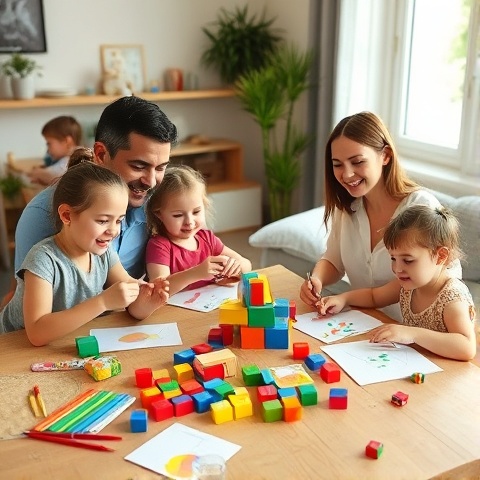
It's 3 PM on a rainy Saturday, and you can already feel the energy building. The kids are restless, the tablets are calling, and you're searching for that magical solution to transform a potentially screen-heavy afternoon into something special. Sound familiar? You're not alone in this modern parenting challenge.
The reality is that screens aren't inherently evil—they're tools. But when they become the default answer to "I'm bored," we miss out on incredible opportunities for creativity, problem-solving, and genuine family connection. The good news? With a little preparation and creativity, you can turn any rainy day into an adventure that your kids will remember long after the sun comes out.
The Magic Behind Screen-Free Fun
Research shows that unstructured, creative play is crucial for developing executive function, emotional regulation, and social skills. When kids engage in hands-on activities, they're not just having fun—they're building the neural pathways that will serve them throughout their lives. Plus, these activities often naturally include the whole family, creating those precious bonding moments we all crave.
10 Screen-Free Activities That Actually Work
1. Create Your Own Coloring Book
Instead of buying coloring books, make them! Have your kids come up with wild, imaginative prompts: "A dinosaur driving a spaceship" or "A cat that can fly." Then use our AI Coloring Page Generator to bring their ideas to life. Print the results and you have a completely personalized coloring book that reflects your child's unique imagination.
This activity combines storytelling, planning, and artistic expression. Kids love seeing their ideas come to life, and you can extend the fun by having them create stories about their characters or even act out the scenes they've imagined.
2. Memory Lane Coloring Pages
Grab some family photos—vacation shots, birthday parties, or even pictures of your pets—and transform them into coloring adventures using our Photo to Coloring Page converter. The results are always surprising and delightful, giving kids a new way to engage with family memories.
As kids color these personalized pages, they often share stories and memories associated with the original photos. It becomes a beautiful blend of art and storytelling that naturally brings the family together around shared experiences.
3. Digital Art Collaboration
Set up your devices side by side and work on the same coloring page using our Online Coloring Tools. One person can work on the background while another focuses on the main character. Take turns adding details or create friendly competitions to see who can come up with the most creative color combinations.
This activity teaches collaboration, compromise, and creative problem-solving. Kids learn to negotiate ("Can I color the sky purple?") and appreciate different artistic perspectives.
4. Treasure Hunt Creation
Turn your kids into treasure hunt designers! Have them create clues, draw maps, and hide "treasures" (small toys, treats, or even hand-drawn certificates) around the house. Younger kids can draw picture clues, while older ones can write riddles or create word puzzles.
This activity develops spatial reasoning, creative writing, and problem-solving skills. Plus, once the hunt is set up, the whole family can participate in solving it together.
5. Sock Puppet Theater
Gather old socks, buttons, yarn, and markers to create an entire cast of characters. Once the puppets are made, encourage kids to develop personalities, voices, and stories for each character. Set up a "theater" using a cardboard box or simply the back of the couch.
Puppet shows combine crafting, storytelling, and performance art. They help kids develop confidence, creativity, and public speaking skills in a fun, low-pressure environment.
6. Indoor Obstacle Course Design
Challenge kids to design and build an obstacle course using household items: pillows to jump over, tape lines to balance on, chairs to crawl under, and containers to toss balls into. Let them be the architects and engineers of their own physical challenge.
This activity combines physical exercise with problem-solving and spatial reasoning. Kids naturally iterate on their designs, learning about cause and effect while getting their energy out.
7. Family Cookbook Creation
Start a family cookbook by having kids interview family members about their favorite recipes, then illustrate each recipe with drawings or photos. Include funny stories about cooking disasters, family traditions, and why certain foods are special.
This project combines writing, interviewing, artistic skills, and family history preservation. It's something that can be worked on over multiple rainy days and becomes a treasured family keepsake.
8. Science Experiment Lab
Transform your kitchen into a science laboratory with simple experiments using household items: making volcanoes with baking soda and vinegar, creating rainbow milk with food coloring and dish soap, or growing crystals with salt and string.
Science experiments naturally encourage hypothesis formation, observation skills, and critical thinking. Kids learn to predict outcomes, observe results, and ask "what if" questions.
9. Indoor Camping Adventure
Build a fort using blankets, chairs, and pillows. Create camping activities like "campfire" stories (using a flashlight), indoor s'mores (microwave marshmallows), and nature scavenger hunts using houseplants or nature pictures.
Indoor camping combines construction skills, imaginative play, and family bonding. It transforms familiar spaces into adventure zones and creates a sense of special occasion from ordinary materials.
10. Time Capsule Creation
Help kids create a time capsule filled with current favorites: drawings, photos, small toys, letters to their future selves, and lists of current interests. Seal it up and decide together when to open it—maybe in a year, or when they graduate.
Time capsules encourage reflection, goal-setting, and an understanding of how people and interests change over time. It's a meaningful project that creates anticipation for the future while celebrating the present.
The Real Magic: Connection Over Perfection
Remember, the goal isn't to create Pinterest-perfect activities or to eliminate screens entirely. It's about creating intentional moments of connection, creativity, and joy. Some days the sock puppets will be lopsided, the obstacle course will be too easy, and the science experiments might not work as planned. That's not failure—that's real life, and those imperfect moments often become the most treasured memories.
The activities that work best are the ones that match your family's energy level, interests, and available time. Start with one or two that excite you most, and remember that enthusiasm is contagious. When kids see that you're genuinely excited about spending time together, they naturally want to participate.