Digital vs. Traditional Art: A Parent's Guide to Choosing the Right Tools
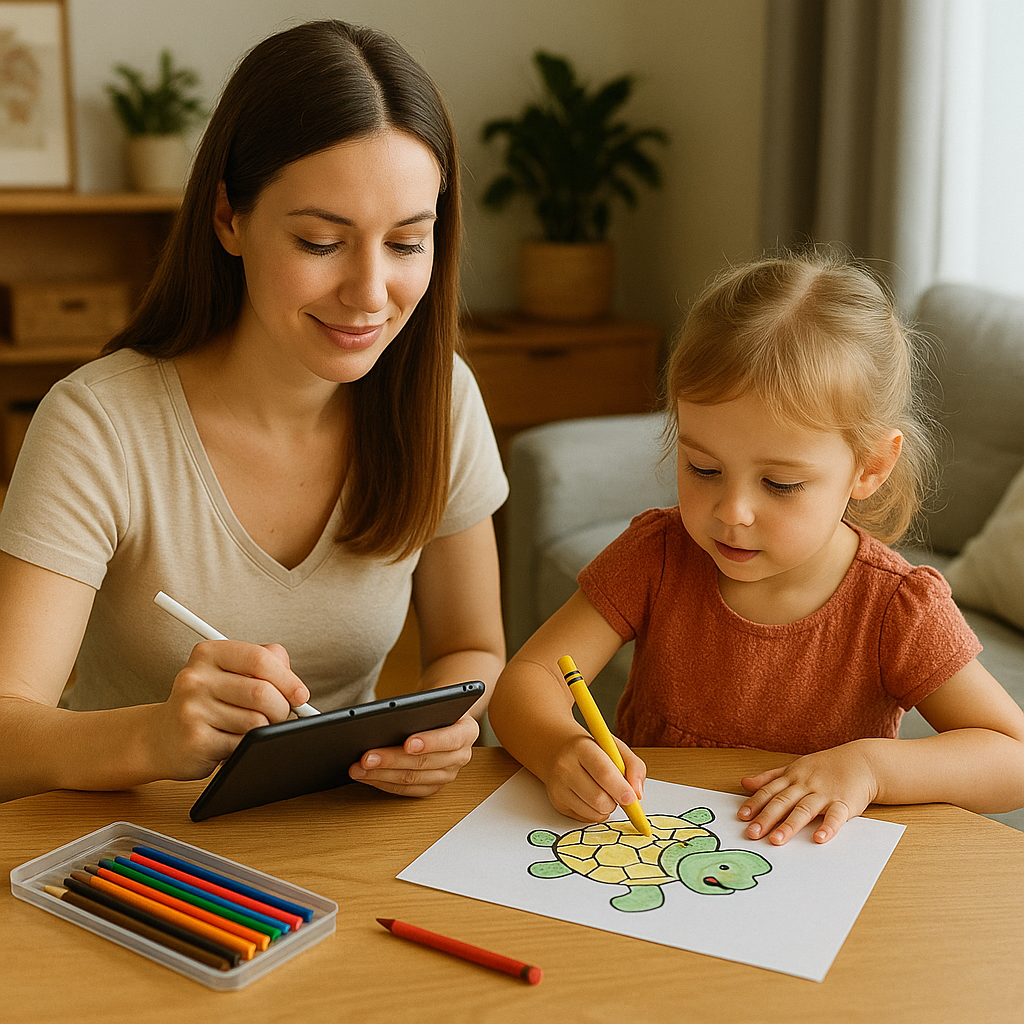
In today's world, the crayon box and the tablet often live side-by-side. As a parent, it can be confusing to know which is "better" for your child's creative development. Should you encourage screen-based art or stick to old-fashioned paper and paint? The good news is, it's not a competition. Both digital and traditional art offer unique and valuable benefits, and the healthiest approach is a balanced one.
Understanding the strengths of each medium can help you guide your child's creative journey and make the most of both worlds.
The Magic of Traditional Art
Crayons, paint, clay, and paper provide a sensory-rich experience that digital tools can't replicate. The smell of a crayon, the texture of paint, the resistance of paper—these are all crucial for a young child's developing brain. Traditional art is king for building fine motor skills, understanding cause and effect (e.g., pressing harder makes a darker line), and embracing the beauty of imperfection.
- Strength: Unmatched sensory feedback.
- Best for: Developing fine motor skills.
- Outcome: A physical keepsake.
The Power of Digital Art
Digital art tools, like our online coloring canvases, offer a different set of advantages. They provide an endless supply of colors and brushes. The 'undo' function is a game-changer, encouraging risk-taking and experimentation without the fear of "ruining" a picture. It's also incredibly convenient, portable, and completely mess-free.
- Strength: Encourages experimentation (Undo!).
- Best for: Exploring color theory and travel.
- Outcome: Easily shareable digital files.
Finding a Healthy, Balanced Approach
The goal is to create a "yes, and" approach. Instead of seeing them as competitors, view them as partners in creativity. Here are three practical ways to integrate both mediums:
Hybrid Project Idea #1: Digital to Physical
Use our AI generator to create a unique coloring page based on your child's wild ideas ("a T-Rex playing a guitar on the moon!"). Print it out, and then use traditional materials—crayons, markers, and even glitter glue—to bring the digital creation into the physical world.
Hybrid Project Idea #2: Physical to Digital
Have your child draw a picture on a plain white piece of paper using a black marker. Take a clear, well-lit photo of the drawing with your phone. Upload this photo to our Photo Converter to turn their own line art into a digital coloring page they can color again and again.
By valuing both mediums, you give your child a rich, diverse set of tools to express their unique vision of the world. You're teaching them that creativity isn't about the tool you use, but the imagination you bring to it.