The Science of Play: How Fun Activities Boost Brain Development
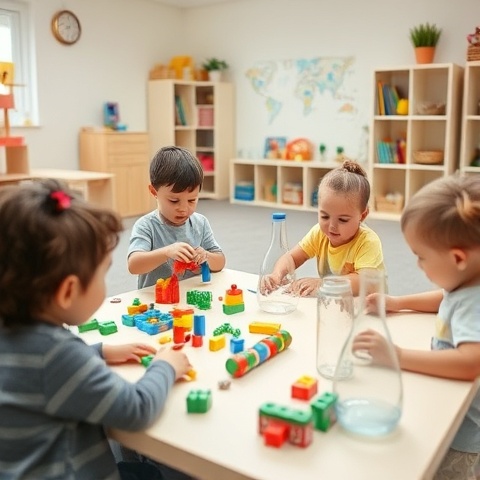
Watch a toddler stack blocks, a preschooler create an elaborate pretend play scenario, or a school-age child lose themselves in a creative project, and you're witnessing something remarkable: the human brain actively wiring itself for future success. What looks like simple fun is actually sophisticated neural architecture in action, laying the foundation for everything from academic achievement to emotional intelligence.
For decades, we've treated play as the dessert of childhood—something kids do after the "real" work of learning is done. But cutting-edge neuroscience research is revealing that play isn't separate from learning; it IS learning. When children engage in play, they're not just having fun—they're building the neural networks that will serve them throughout their lives.
Your Child's Brain on Play
When children engage in play, their brains light up like a Christmas tree. Multiple regions activate simultaneously: the prefrontal cortex (executive function), the limbic system (emotions), the motor cortex (movement), and language centers all work together. This cross-brain activation creates what neuroscientists call "neuroplasticity"—the brain's ability to form new connections and strengthen existing ones.
The Neuroscience Behind the Fun
Recent research from institutions like MIT, Harvard, and the University of Rochester has revealed that play triggers the release of brain-derived neurotrophic factor (BDNF), a protein that acts like fertilizer for brain cells. This isn't just academic theory—brain imaging studies show actual structural changes in children who engage in regular, diverse play activities.
Executive Function: The CEO of the Brain
Executive function encompasses the mental skills of working memory, flexible thinking, and self-control. These skills are crucial for academic success, but they can't be taught through worksheets. They're developed through play. When a child builds a tower and it falls down, they're learning persistence and problem-solving. When they negotiate rules in a game with friends, they're developing social reasoning and emotional regulation. When they engage in pretend play, they're exercising their working memory by holding multiple storylines and character traits in mind simultaneously.
Play-Based Activities That Build Executive Function
Building and Construction Play:
Blocks, LEGOs, and magnetic tiles teach spatial reasoning, planning, and problem-solving while children visualize and execute their designs.
Pretend Play and Drama:
Role-playing strengthens working memory, perspective-taking, and emotional regulation as children hold multiple scenarios in mind.
Games with Rules:
Board games, card games, and organized sports teach impulse control, strategic thinking, and flexible problem-solving.
Art and Creative Expression:
Drawing, painting, and crafting develop fine motor skills, planning abilities, and creative problem-solving while processing emotions.
Social-Emotional Learning Through Play
Play is nature's way of teaching children how to navigate social relationships. When children play together, they're constantly reading social cues, negotiating conflicts, and learning to see situations from multiple perspectives. This kind of social learning can't happen in isolation—it requires the rich, complex interactions that play provides.
Research by Dr. Sergio Pellis at the University of Lethbridge shows that children who engage in more social play develop better emotional regulation and social competence. They learn to manage disappointment when they lose a game, celebrate others' successes, and work collaboratively toward common goals. These skills become the foundation for healthy relationships throughout their lives.
Language Development: More Than Words
Play is a language laboratory where children experiment with words, sounds, and communication styles in a low-pressure environment. During pretend play, children often use more complex language than they do in regular conversation, trying out new vocabulary and sentence structures as they create their imaginary worlds.
Singing games, rhyming activities, and wordplay not only build phonological awareness (crucial for reading) but also strengthen the neural pathways that connect language centers in the brain. This is why children who engage in rich play experiences often show accelerated language development and better reading readiness.
Age-Appropriate Play for Brain Development
Toddlers (1-3 years):
Sensory play, simple stacking toys, peek-a-boo games, and basic pretend play help develop cause-and-effect understanding and object permanence.
Preschoolers (3-5 years):
Complex pretend play, art projects, building activities, and cooperative games develop executive function and social skills.
School-age (6-12 years):
Strategy games, team sports, creative projects, and hobby exploration enhance abstract thinking and specialized skills.
The Stress Factor: Why Relaxed Learning Works Best
One of the most important discoveries in learning research is the role of stress in brain development. When children are stressed or anxious, their brains go into survival mode, focusing resources on the areas needed for immediate safety rather than learning and growth. Play, by its very nature, creates a safe, enjoyable environment where learning can flourish.
Dr. Jaak Panksepp's research on the neuroscience of play shows that playful activities trigger the release of positive neurochemicals like dopamine and endorphins, which not only make children feel good but also enhance memory formation and creative thinking. This is why children remember lessons learned through play much better than information presented through rote instruction.
Creating the Optimal Play Environment
Understanding the science of play helps us create environments that maximize its benefits. Here are key principles based on neuroscience research:
Unstructured Time: While organized activities have their place, children's brains benefit most from unstructured play where they can follow their own interests and curiosity. This type of play allows for the kind of creative exploration that builds the strongest neural pathways.
Varied Experiences: Different types of play activate different brain regions. A rich play diet includes physical play (gross motor development), creative play (artistic expression), social play (interpersonal skills), and quiet play (contemplation and processing).
Adequate Challenge: The brain grows most when faced with appropriate challenges—not so easy that there's no growth, but not so hard that stress overwhelms the system. Watch your child's play and notice when they're in that sweet spot of engaged concentration.
Red Flags: When Play Becomes Problematic
While play is generally beneficial, there are times when adult guidance is needed:
- • When play becomes overly aggressive or emotionally overwhelming
- • When children seem unable to transition from play to other activities
- • When play themes become stuck in repetitive, concerning patterns
- • When children avoid all social play or become overly distressed during group activities
These situations don't mean play is bad—they're opportunities to help children develop better play skills with gentle guidance and support.
The Long-Term Impact
The benefits of rich play experiences extend far beyond childhood. Longitudinal studies show that children who engage in diverse, imaginative play develop stronger creative problem-solving abilities, better emotional intelligence, and more resilient coping strategies as adults. They're more likely to be innovative thinkers, collaborative team members, and emotionally healthy individuals.
Perhaps most importantly, children who experience joyful, engaging play develop a love of learning that lasts a lifetime. They approach new challenges with curiosity rather than anxiety, see mistakes as learning opportunities rather than failures, and maintain the kind of creative thinking that our rapidly changing world desperately needs.
Supporting Your Child's Play-Based Learning
As parents and caregivers, our role isn't to orchestrate every moment of our children's play, but to create conditions where rich, beneficial play can flourish. This means providing time, space, and materials for play while resisting the urge to over-direct or turn every play moment into a formal lesson.
Trust in the process. When you see your child engaged in deep play—whether they're building elaborate structures, creating detailed drawings, or lost in imaginative scenarios—you're watching their brain grow. Every moment of genuine play is an investment in their cognitive, emotional, and social development. The science is clear: play isn't just fun—it's fundamental to healthy human development.
Support Your Child's Brain Development
Give your child's developing brain the creative challenges it craves! Our coloring activities provide the perfect blend of artistic expression, fine motor skill development, and creative thinking.